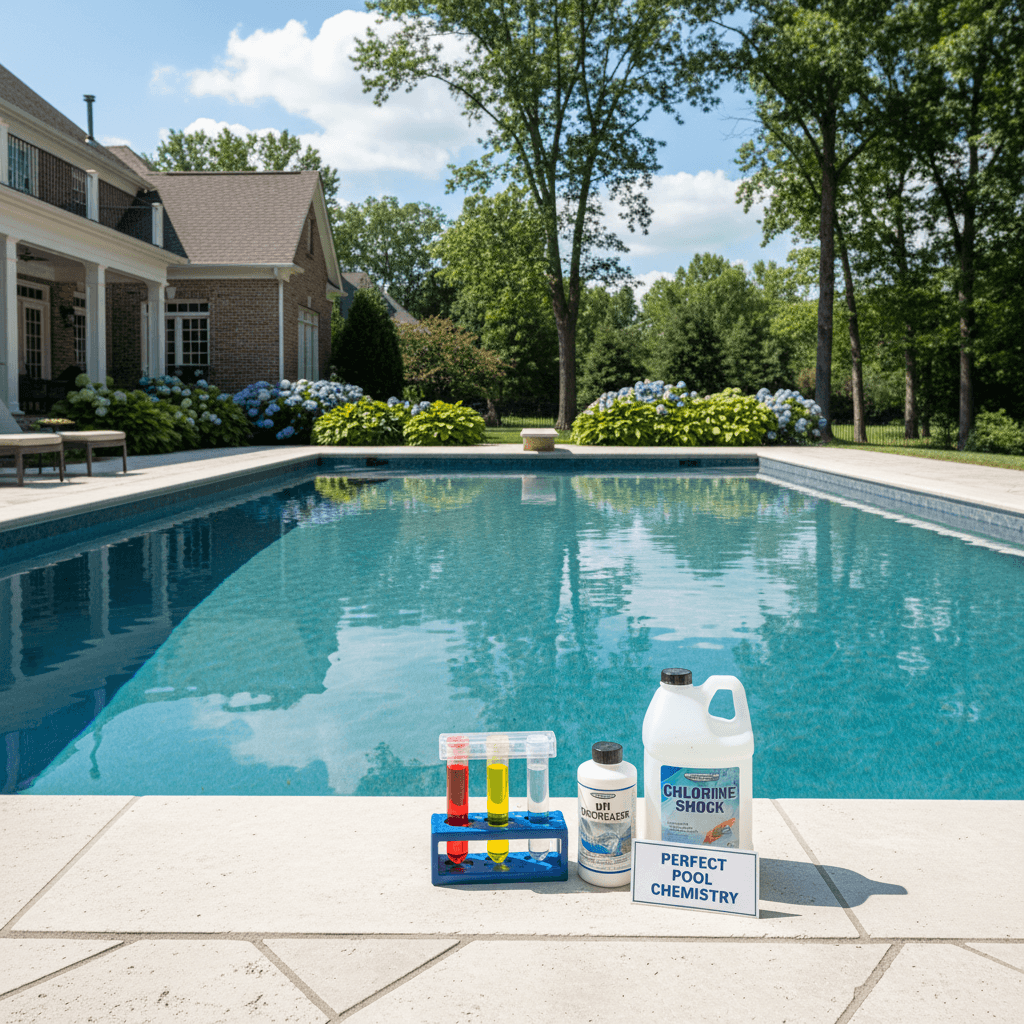
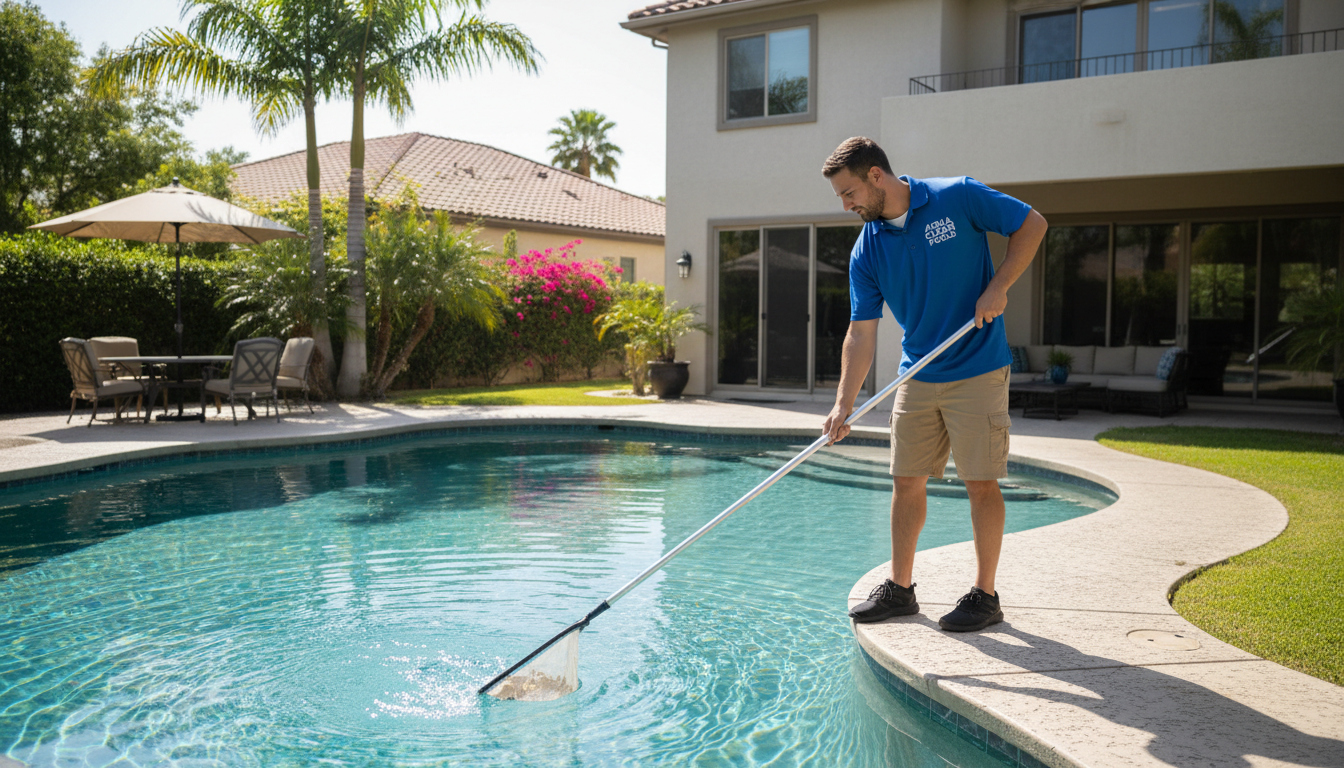
Standard monthly professional pool maintenance typically ranges from $120 to $300 depending on location and the specific cleaning needs of the water. When evaluating how much does a pool service cost, most homeowners find that an annual investment of $1,800 to $3,000 covers full service tasks such as chemical balancing, netting, and equipment maintenance. Basic weekly visits may also be available starting at $80 per visit, though chemicals are often excluded from that base price.
Maintaining a pristine pool in Hamilton County often feels like a full time job that requires constant attention to chemical levels and equipment performance. Homeowners frequently find themselves staring at cloudy water and wondering if their DIY efforts are actually saving money or simply delaying a major repair bill. Understanding the true cost of professional pool service requires looking beyond the monthly invoice to the specific value of expert labor and preventative care. This guide provides a detailed breakdown of local pricing structures, the essential tasks included in a full service checklist, and how professional water balancing protects your family. We will also examine the long term financial benefits of outsourcing maintenance so you can determine which service package aligns with your budget and leisure goals.
How Much Does a Pool Service Cost in Hamilton County?
When homeowners ask how much does a pool service cost, the answer depends largely on the level of care required and the specific environment of the property. In Hamilton County, Indiana, most residential maintenance packages range from $150 to $350 per month. While the national average for pool maintenance is approximately $237, local conditions in Central Indiana play a significant role in determining the final price.
Our region experiences a relatively short but very intense swimming season. This means equipment works harder over a few months compared to warmer climates where usage is spread out. For residents in Carmel, Fishers, and Noblesville, professional pool services must account for specific regional challenges. This includes managing local water hardness that can cause scale buildup and handling the seasonal influx of debris, such as the cottonwood seeds that frequently plague Hamilton County backyards in early summer.
View these monthly fees as an investment in asset protection rather than a simple utility expense. A swimming pool is a major home asset; neglecting it can lead to thousands of dollars in restoration costs. A professional service ensures that the water chemistry and mechanical systems are balanced to prevent long term damage to your pool’s surface and plumbing. If you have specific queries about what is included in these rates, you can consult our pool maintenance frequently asked questions for a more detailed breakdown of local service expectations.
The Full Service Checklist: What You Are Paying For
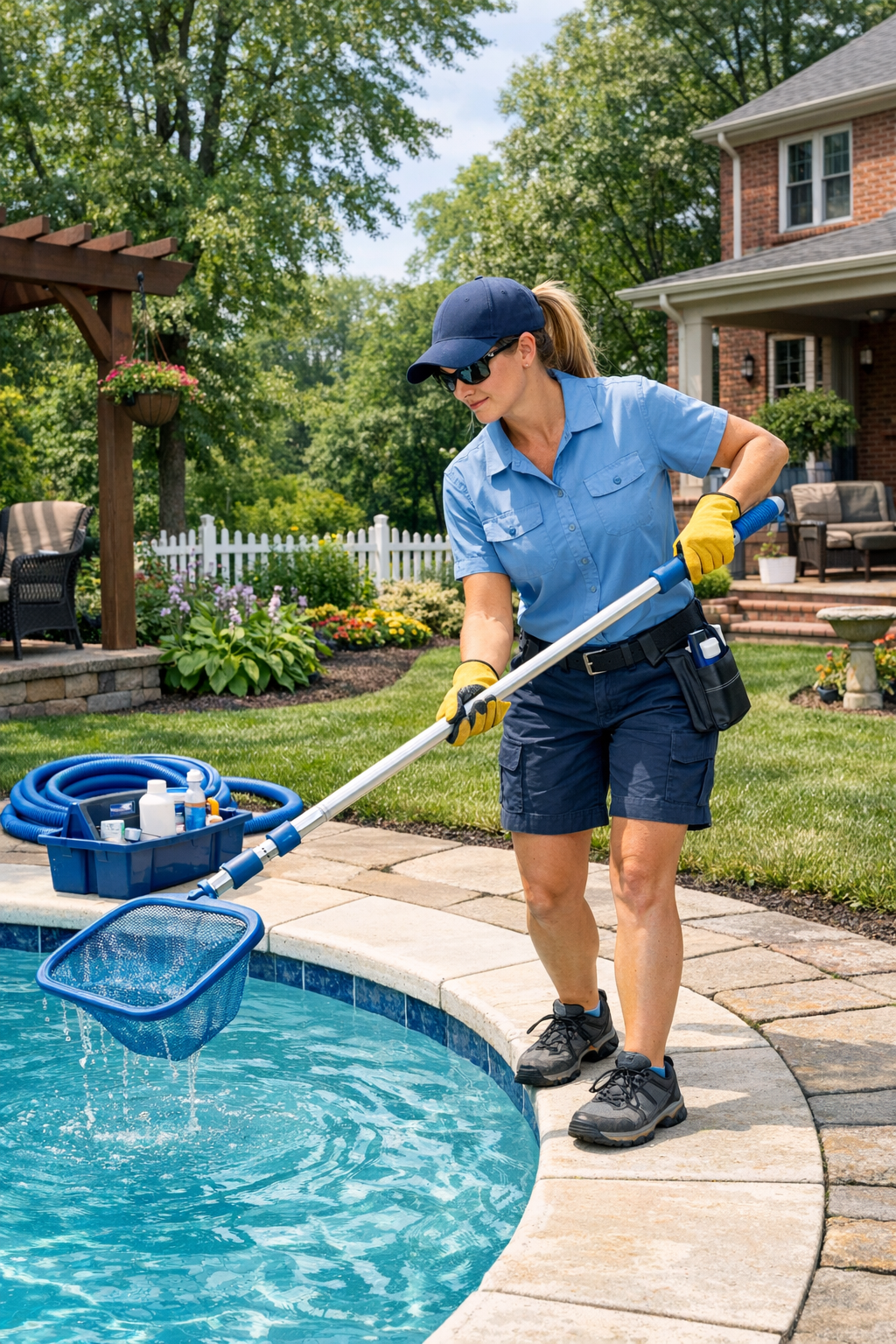
When assessing how much does a pool service cost, it is vital to understand the specific labor and technical oversight that separates a professional technician from the neighborhood kid with a net. A standard maintenance visit consists of three distinct pillars of service that protect both your water quality and your mechanical equipment.
### Physical Cleaning This is the most visible part of the visit, focused on removing organic matter before it can break down and affect water chemistry. For Hamilton County properties, this often involves managing heavy seasonal debris. - Skimming: Removing surface debris like the thick cottonwood seeds common in Noblesville and Fishers during early summer. - Vacuuming: Removing heavy sediment and fine silt that settles on the pool floor which automated cleaners often miss. - Brushing: Scrubbing the walls, steps, and tiles to prevent biofilm and algae from gaining a foothold in low circulation areas.
### Water Chemistry Maintaining balance is a precise science. We move beyond basic test strips to provide a comprehensive analysis of the water.
Metric | Target Range | Purpose |
|---|---|---|
pH Level | 7.4 - 7.6 | Protects equipment and ensures swimmer comfort. |
Total Alkalinity | 80 - 120 ppm | Buffers the pH to prevent rapid fluctuations. |
Free Chlorine | 1.0 - 3.0 ppm | Sanitizes the water against bacteria and pathogens. |
Calcium Hardness | 200 - 400 ppm | Prevents the water from becoming corrosive or forming scale. |
### System Health The biggest differentiator of professional pool services is the mechanical inspection. We evaluate the heart of the pool during every visit. Technicians empty pump and skimmer baskets to maintain proper flow, monitor filter pressure readings to determine if a backwash is required, and inspect visible plumbing for minor drips. Identifying a failing pump seal or a clogged impeller during a routine check can prevent a total motor failure mid season. If you are curious about specific equipment requirements for your setup, our pool maintenance frequently asked questions provides more detail on how we handle different filtration systems.
The Chemistry of Value: Why Professional Balancing Matters
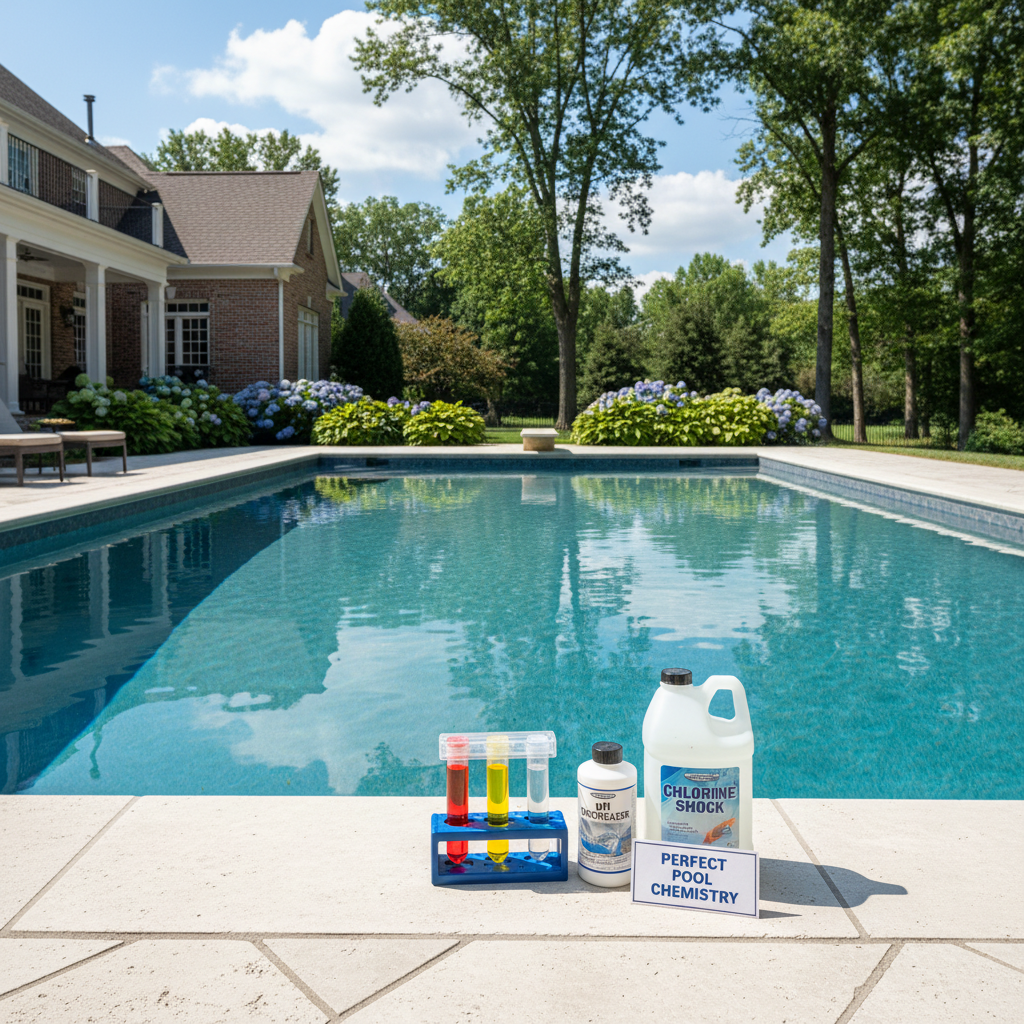
The chemicals used to maintain a pool are not all created equal. When evaluating how much does a pool service cost, it is essential to look at the quality of the products being added to your water. Professional professional pool services typically utilize commercial grade chemicals that lack the fillers often found in buckets from big box retailers. Retail chlorine tablets frequently contain high concentrations of Cyanuric Acid (CYA). While some CYA is necessary to protect chlorine from the sun, excessive amounts lead to chlorine lock; this renders your sanitizer useless and eventually requires a partial drain and refill of the pool to reset the chemistry.
Beyond the clarity of the water, professional balancing is a form of insurance for your pool’s physical structure. Water is a natural solvent; if it is not properly balanced with the right minerals, it will pull what it needs from its environment. This results in the etching of plaster surfaces or the leaching of plasticizers from vinyl liners, causing them to become brittle and wrinkle. These structural failures are not minor fixes. They often result in multi-thousand dollar restoration projects that far exceed the annual cost of professional maintenance.
For families across Hamilton County, the ultimate value of professional chemistry is safety. A technician ensures that the water is aggressive enough to kill pathogens and bacteria while remaining balanced enough to be gentle on eyes and skin. Maintaining this delicate equilibrium requires sophisticated testing and precise dosing that goes beyond basic homeowner kits. You can learn more about our specific chemical standards in our pool maintenance frequently asked questions.
Labor vs. Leisure: The Time Value of Professional Maintenance
The true expense of managing a swimming pool independently often centers on the clock rather than the checkbook. Homeowners who choose the DIY route typically spend between two and four hours every week on maintenance tasks. This commitment includes the physical cleaning of debris, precise water testing, and the inevitable commute to the supply store to restock heavy chemical buckets.
Over the course of a standard month in Central Indiana, this adds up to 10 or 15 hours of manual labor. When evaluating how much does a pool service cost, consider that you are essentially purchasing those hours back. For busy professionals in Geist or Westfield, weekends are a finite resource. Spending a Saturday morning scrubbing the tile line or troubleshooting a suction leak represents time taken away from family and relaxation.
By outsourcing these tasks to professional pool services, the pool transforms back into a source of leisure rather than a recurring item on a chore list. Our team handles the logistics and the labor, ensuring that your only responsibility is to enjoy the water. This shift in perspective moves the service from an expense to a lifestyle enhancement. For more information on how we structure our visits to maximize your free time, please see our pool maintenance frequently asked questions.
Preventative Maintenance: Saving Money on Major Repairs
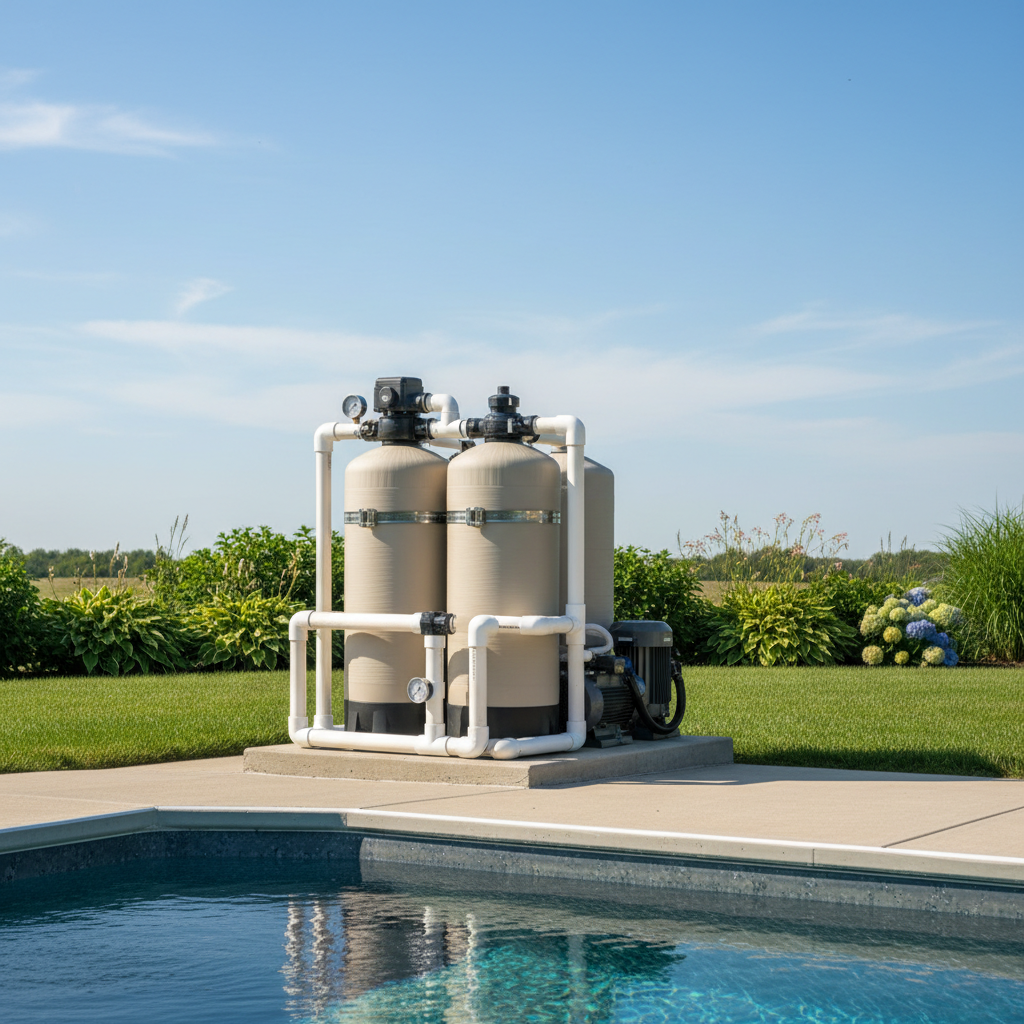
Shifting the focus from simple cleaning to technical oversight reveals the true financial benefit of professional pool services. A major component of how much does a pool service cost is the preventative care that stops small mechanical issues from escalating into catastrophic failures. Much like an HVAC technician identifies a worn capacitor before the air conditioning dies during a July heatwave, a pool professional monitors the heart of your backyard. This move from seeing pool care as a luxury to viewing it as essential home maintenance is key for Hamilton County homeowners.
During a routine visit, we look for subtle signs of wear that go unnoticed by the untrained eye. A common example is a weeping pump shaft seal. This small component prevents water from entering the motor. If caught early, a seal replacement is a straightforward, affordable repair. If ignored, the leaking water eventually corrodes the motor bearings, leading to a seized motor and a much higher bill.
Potential Issue | Early Detection Repair | Total System Replacement |
|---|---|---|
Pump Shaft Seal | $150 - $250 | $1,200 - $1,800 (Motor/Pump) |
Clogged Impeller | Cleaning/Clearing | $800 - $1,200 (Motor Burnout) |
Minor Grid Tear | Individual Grid Replacement | $1,500 - $2,500 (New Filter Tank) |
Small Plumbing Leak | PVC Patch or Fitting | $1,000+ (Pad Re-plumb/Washout) |
This proactive approach ensures that residents in Noblesville and Carmel avoid the frustration of a green pool during a holiday weekend because of an avoidable equipment failure. Our technicians also check for calcium buildup in salt cells and debris in impellers that force pumps to run hotter and less efficiently. For more details on our inspection protocols, visit our pool maintenance frequently asked questions. Investing in regular professional pool services means you are paying for an expert to find the problems you didn't know you had before they become problems you cannot ignore.
Comparing Service Packages: Basic vs. Premium
Navigating the options for professional pool services requires balancing your budget with your willingness to perform manual labor. When deciding how much does a pool service cost for your specific property, the decision usually comes down to two primary tiers: chemical-only maintenance and full-service care.
A chemical-only package focuses strictly on the scientific side of pool health. This typically includes professional water testing, the application of necessary treatments like chlorine or acid, and a basic check of the pump baskets. This level of service is ideal for a homeowner who enjoys the physical routine of skimming leaves and vacuuming but prefers to leave the chemical inventory and dosing to an expert. However, it leaves the burden of physical cleanliness and debris management entirely on the owner.
Full-service packages offer the most comprehensive protection. These include every task mentioned in the checklists above, from deep vacuuming and tile scrubbing to detailed mechanical inspections. This level of care is designed for those who want their pool ready for use at any moment without lifting a finger.
Service Level | Chemical Balancing | Surface & Floor Cleaning | Mechanical Inspection | Best For |
|---|---|---|---|---|
Chemical Only | Included | Homeowner Duty | Basic Visual Check | Hands-on owners |
Full Service | Included | Included | Comprehensive Review | Busy professionals |
One of the most frequent inquiries in our pool maintenance frequently asked questions is whether weekly service is truly necessary. In the Hamilton County climate, weekly visits are almost always the most cost-effective choice. Bi-weekly service allows for significant chemical drifts; a sudden mid-July heatwave or a heavy Indiana thunderstorm can deplete chlorine levels in days. By the time a technician arrives every two weeks, the water often requires heavy shock treatments to kill burgeoning algae blooms. These corrective measures are expensive and harsh on equipment, often negating any perceived savings from a less frequent schedule.