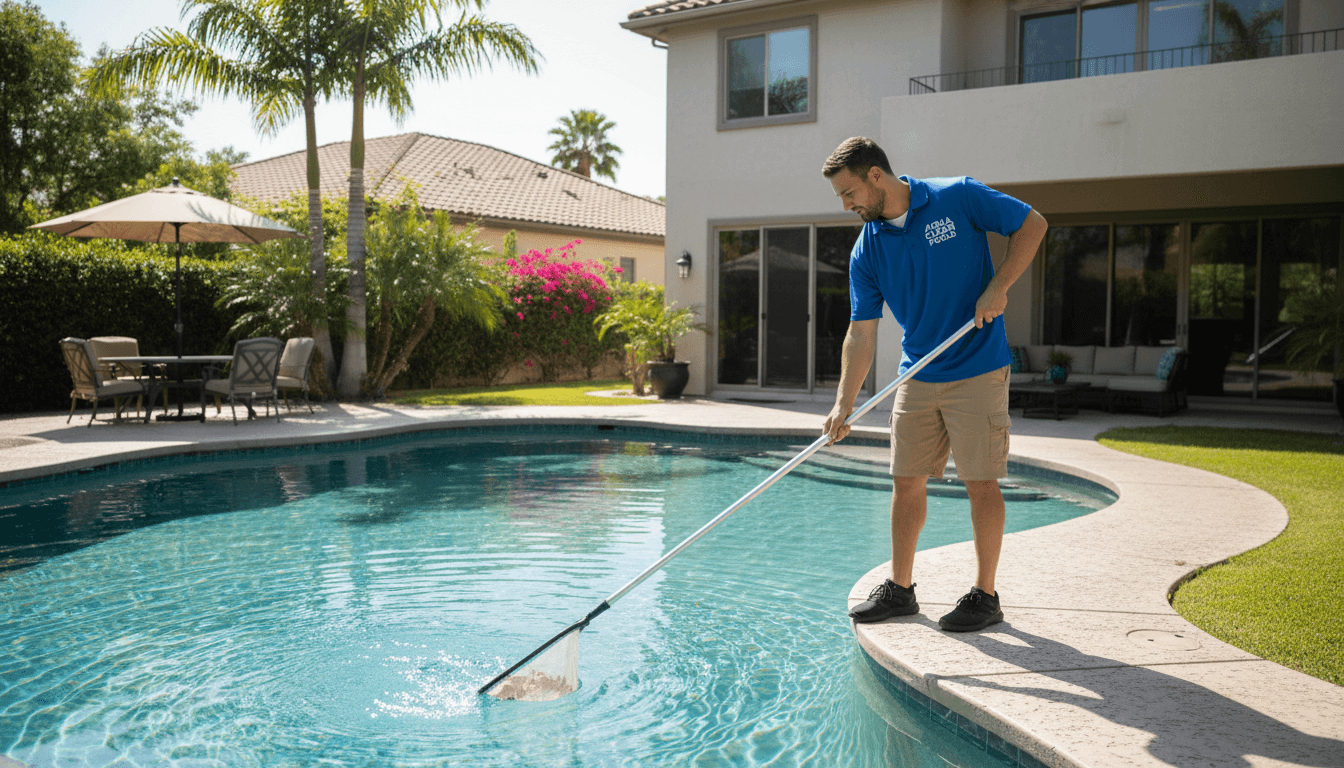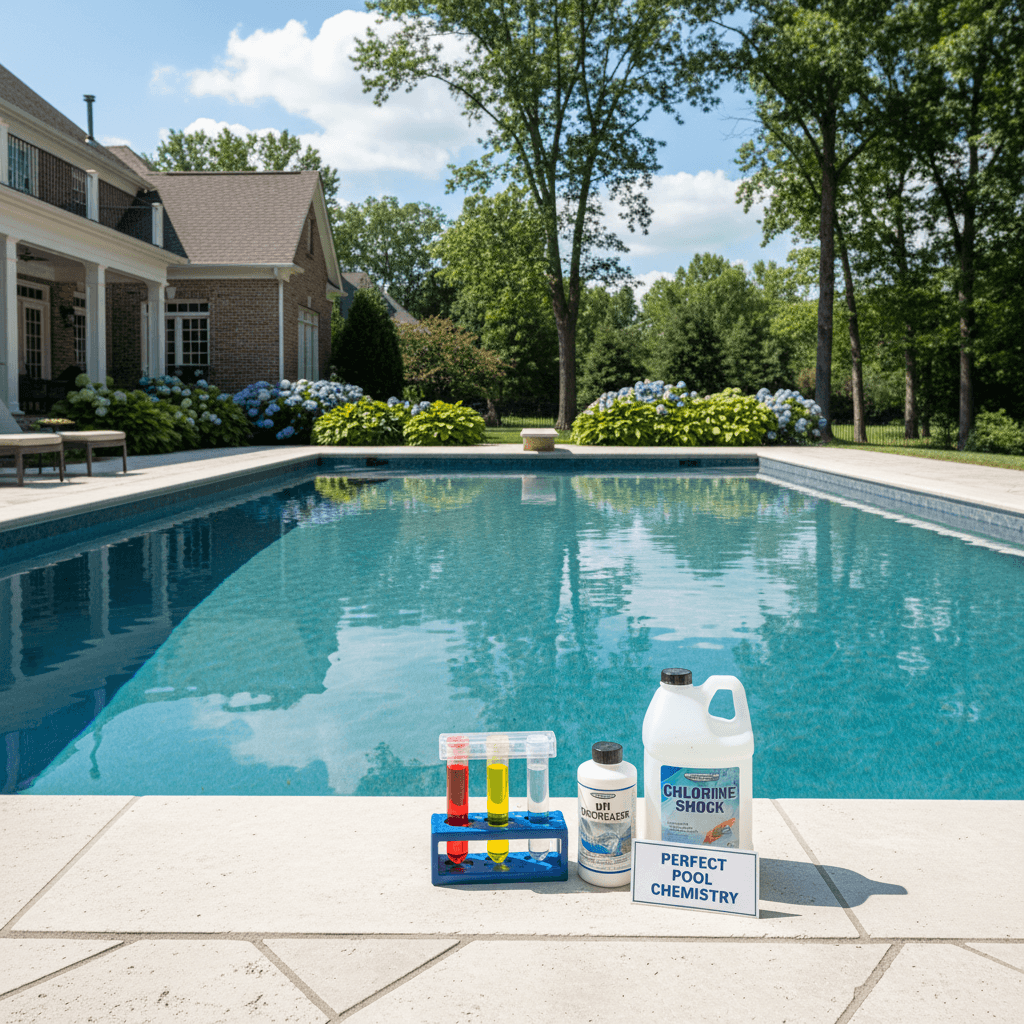

Effective pool maintenance for beginners requires a consistent weekly schedule of skimming debris, brushing walls, and vacuuming to prevent buildup. Testing water chemistry regularly to balance pH and chlorine levels is also essential; these steps ensure the water remains clear and safe for swimming throughout the season.
Owning a private pool in Hamilton County should represent the pinnacle of relaxation, yet for many new owners, the reality is often defined by a steep learning curve and constant maintenance anxiety. Navigating the delicate balance of chemicals and filtration can feel overwhelming; however, establishing a proactive routine is the only way to preserve your investment and ensure a safe swimming environment. This guide provides a clear, expert roadmap for mastering the Three Cs of pool care while addressing the unique challenges posed by the Indiana climate. You will discover the fundamental steps for debris removal, water chemistry, and filtration management. By following these professional insights, you can move past the confusion of beginner ownership and maintain a crystal clear oasis with confidence. Our goal is to transform your weekly chores into a streamlined process that prioritizes efficiency and long term water health.
The Core Foundation: Understanding the Three Cs of Pool Care
Establishing a routine for pool maintenance for beginners starts with mastering the Three Cs: Circulation, Cleaning, and Chemistry. These concepts represent the essential pillars that keep your water crystal clear and inviting. In Central Indiana, where summer humidity often reaches stifling levels, these pillars become even more critical to prevent rapid algae growth.
Circulation refers to the movement of water through your filtration system. Stagnant water is an invitation for bacteria and mosquito larvae. In Hamilton County, fluctuating temperatures mean your pump must work efficiently to distribute chemicals evenly. Without movement, even a perfectly balanced pool can develop dead zones where algae take root.
Cleaning is the physical removal of organic matter. Leaves from local silver maples or oak trees act as food for algae. Regular skimming and brushing ensure that debris does not decompose and tax your chemical levels.
Chemistry involves balancing pH, alkalinity, and sanitizers. These three components work in a cycle. Without proper circulation, your chemicals will not reach every corner. Without cleaning, your chlorine is wasted fighting dead leaves instead of live bacteria. If you find the technical side overwhelming, our professional pool services can provide a baseline for your season. Neglecting any single 'C' often results in the green pool phenomenon that is common during Indiana’s peak summer weeks. For more specific inquiries, you can review our frequently asked pool questions or contact our maintenance team.
Step 1: Physical Cleaning and Debris Removal
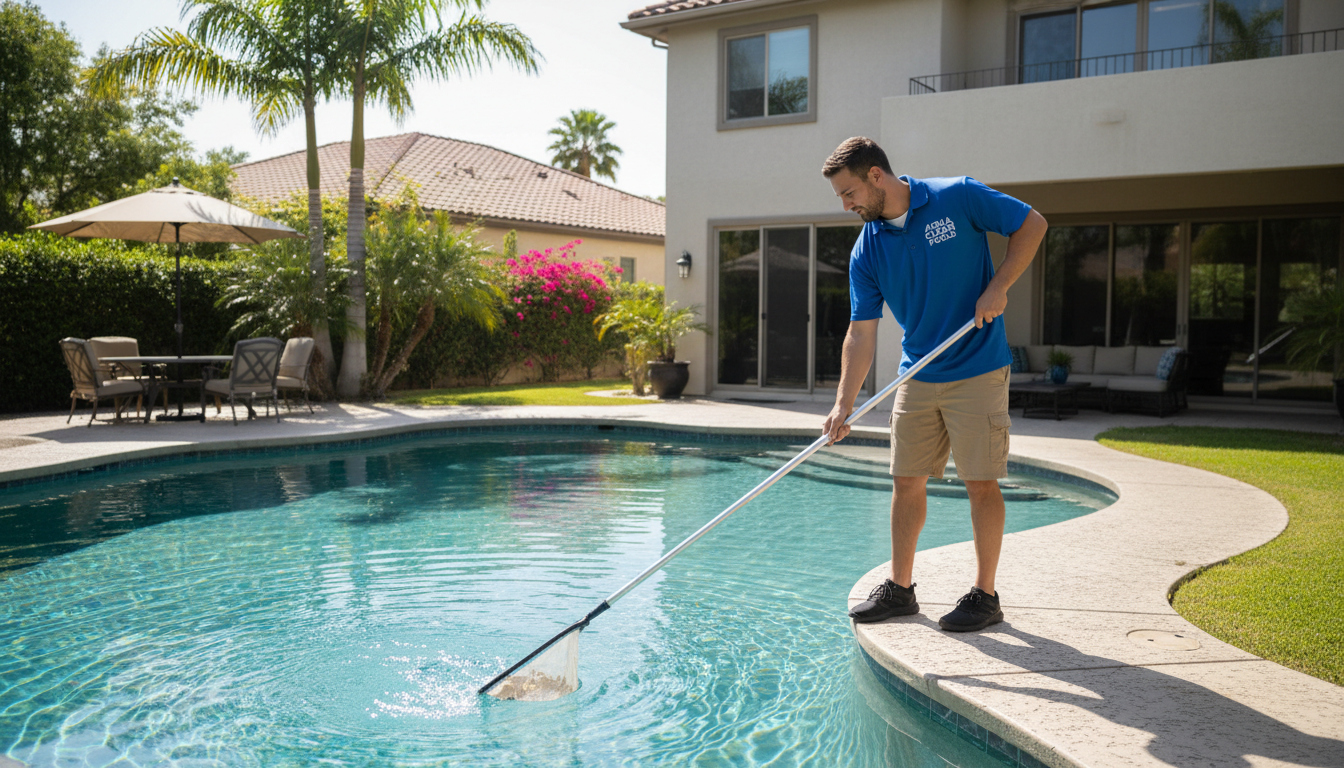
Skimming is the first line of defense against organic contamination. In communities like Carmel and Fishers, where mature tree cover is a hallmark of the landscape, a high volume of leaves and seeds can quickly overwhelm a skimmer basket. While daily skimming is recommended to keep the water surface clear, it is a non-negotiable first step for your weekly pool maintenance for beginners routine. Removing debris before it sinks prevents the breakdown of organic matter, which can otherwise consume your chlorine and lead to localized staining on the pool floor.
Next, focus on brushing the walls, ladders, and corners. This step is often overlooked but remains vital for preventing algae outbreaks. Use a brush compatible with your specific pool surface; nylon brushes are standard for vinyl liners, while stiffer bristles may be used for gunite. Move the brush in firm, overlapping strokes, starting at the water line and working down toward the floor. This process dislodges microscopic algae spores that have begun to take root in the pores of the pool surface. Brushing forces these spores into the water where your sanitizer can effectively neutralize them.
The final stage of physical cleaning is vacuuming the floor. For a deep weekly clean, manual vacuuming is often superior because it allows you to target specific sediment build-up in corners and on steps that automatic cleaners might miss. If you utilize an automatic suction or robotic cleaner, ensure the filter bag or on-board canister is emptied before and after the cycle. For homeowners who find the physical labor of deep cleaning difficult to fit into their schedule, our professional pool services offer a reliable alternative to ensure no debris is left to compromise your water quality.
Step 2: Mastering Water Chemistry for Hamilton County Pools
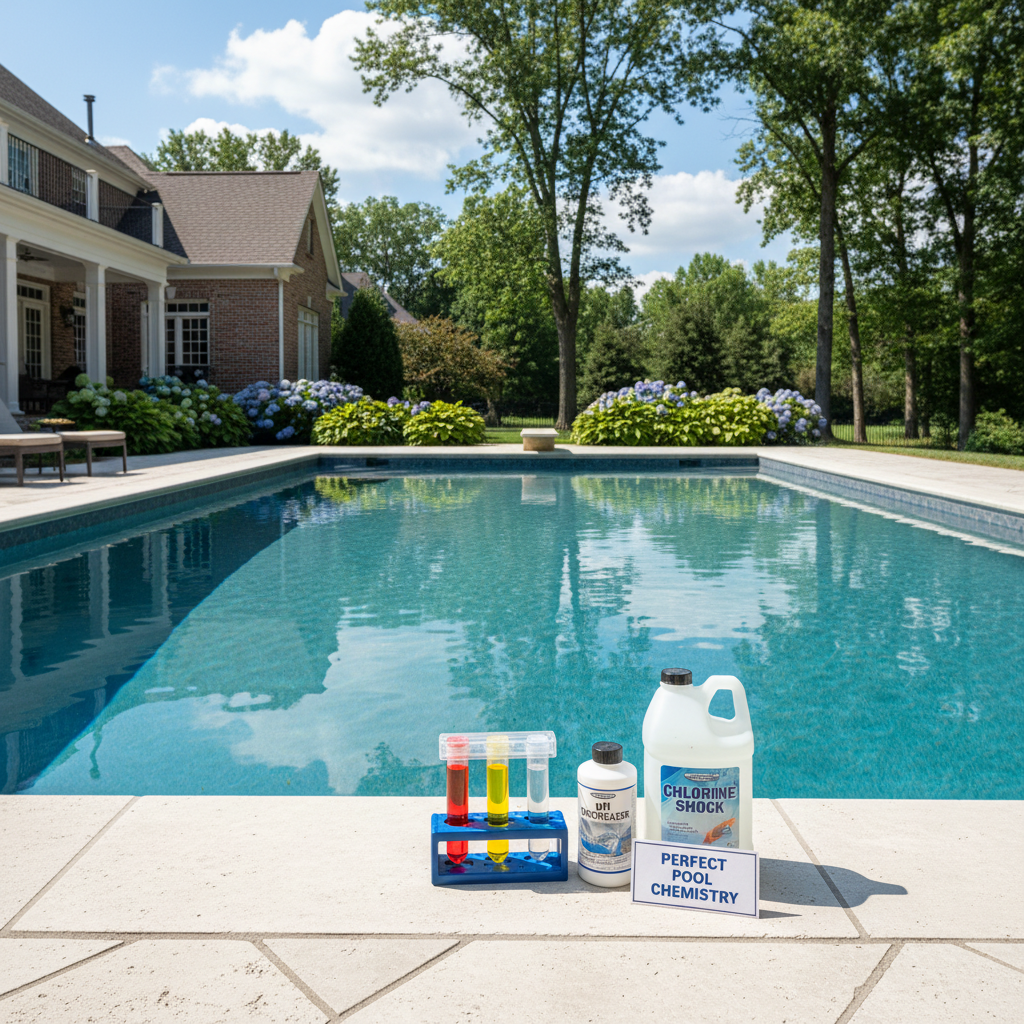
Once the physical debris is removed, you must address the invisible balance of the water. Mastering chemistry is often the most intimidating part of pool maintenance for beginners, but it follows a predictable logic. In Central Indiana, specifically throughout Hamilton County, our source water is notoriously hard, containing high levels of minerals like calcium. This makes monitoring your levels even more vital to prevent scale buildup on your pool tile and equipment.
You should focus on three primary metrics:
Total Alkalinity (TA): Target 80 to 120 parts per million (ppm). TA acts as a buffer for your pH, preventing it from swinging wildly.
pH Level: Target 7.2 to 7.6. This range ensures the water is comfortable for skin and eyes while preventing equipment corrosion.
Free Chlorine: Target 1 to 3 ppm. This is the active sanitizer killing bacteria and algae.
The order of operations is critical to your success. Always balance your Total Alkalinity first. Because TA stabilizes pH, trying to adjust pH while alkalinity is out of range is like trying to paint a moving target. Once TA is set, adjust your pH, and finally, ensure your Free Chlorine is at the appropriate level.
During the peak of the Noblesville summer, bather loads increase as families host more gatherings. High usage, combined with intense heat, consumes chlorine rapidly. We recommend testing your water at least twice a week during July and August. If you struggle to keep these levels stable or find that your water remains cloudy despite your efforts, you can contact our maintenance team for a professional water analysis. For those interested in a deeper dive into specific chemical reactions, our frequently asked pool questions page provides additional clarity. Managing these levels prevents the need for expensive rescue treatments later in the season, though our professional pool services are always available if the chemistry becomes unmanageable.
Step 3: Filtration Maintenance and Circulation
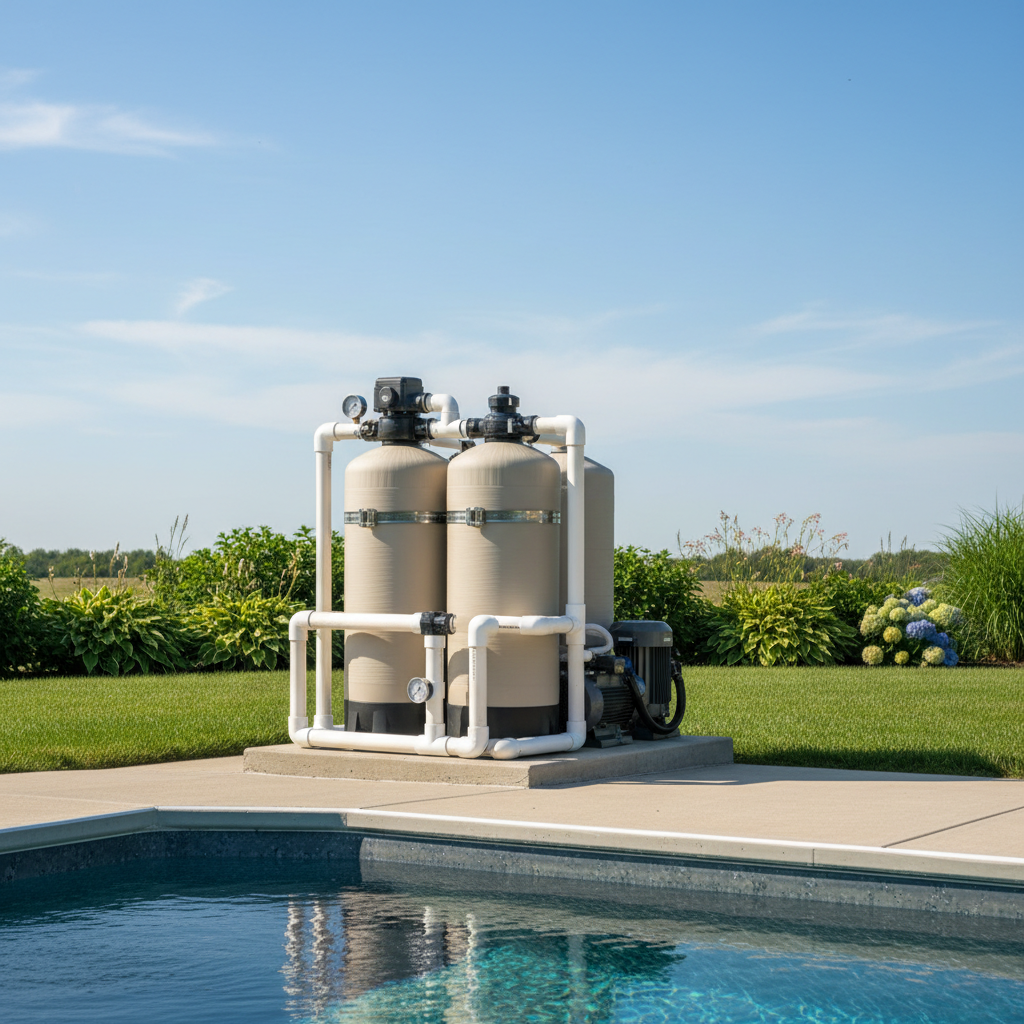
Efficient circulation ensures that the chemicals you just balanced reach every corner of the pool. Think of your pump and filter as the heart of the system. For consistent pool maintenance for beginners, you should run your pump for 8 to 12 hours daily during the Indiana swimming season. This schedule provides enough turnover to keep the water clear and prevents the stagnation that invites algae growth.
Monitoring your filter is equally vital. Check the pressure gauge regularly and record the clean pressure after a fresh cleaning. When the gauge reads 8 to 10 psi above this baseline, the filter is reaching its capacity. At this point, you must backwash a sand or DE filter or manually clean a cartridge filter. Ignoring high pressure restricts flow and can damage internal components. High pressure is a sign that the media is saturated with fine debris, which happens more frequently during periods of high pollen or heavy wind in Hamilton County.
Finally, keep the skimmer and pump baskets free of debris. Clogged baskets create significant resistance, forcing the motor to work harder than necessary and shortening its lifespan. If you find that your equipment is struggling despite clean baskets and filters, you can contact our maintenance team to evaluate the system. Maintaining clear pathways for water flow is the most effective way to protect your investment and ensure your filtration system operates at peak efficiency.
Handling Indiana Weather: Mid-West Pool Maintenance Challenges
Even with a high-performing pump, the local climate in Central Indiana presents specific hurdles that standard pool maintenance for beginners guides often overlook. Hamilton County is prone to sudden, heavy summer thunderstorms that do more than just add water to your pool. Rainwater carries nitrogen and environmental pollutants that can deplete your free chlorine levels overnight. High winds also deposit organic matter that taxes your filtration system.
After a significant storm, follow this targeted recovery routine:
Check the water level: If the water rises above the midpoint of the skimmer opening, the surface won't skim effectively. Drain excess water to restore proper suction.
Skim immediately: Wind-driven debris should be removed before it sinks and begins to decay, which prevents staining and algae growth.
Test and shock: Rainfall often shifts the pH and introduces bacteria. A preventative shock treatment restores sanitizer levels quickly.
Seasonal changes bring their own challenges. In the spring, the heavy pollen count from local oak and maple trees in Carmel and Noblesville can create a fine yellow film that clogs cartridge filters faster than expected. You may need to clean your filter media more frequently during these peak bloom weeks to maintain flow. If your water chemistry fluctuates wildly after a storm, our professional pool services can help stabilize the system. For immediate assistance after severe weather, you can contact our maintenance team to ensure your equipment is operating safely.
Common Beginner Mistakes to Avoid
Even when you account for the unpredictable Indiana weather, certain procedural errors can undermine your hard work. Avoiding common pitfalls is a significant part of mastering pool maintenance for beginners. One frequent error is shocking the pool during the heat of the day. Indiana’s direct summer sunlight quickly burns off unstabilized chlorine; this renders the treatment ineffective and wastes money. Always add shock at dusk to allow the sanitizer to work through the night without interference from UV rays.
Another critical mistake involves adding chemicals directly into the skimmer basket. Concentrated acids or chlorine tablets placed here travel immediately through your plumbing, where they can corrode pump seals and damage heat exchanger tubes. Instead, chemicals should be broadcast across the water surface in the deep end or pre-dissolved in a bucket of pool water as directed. Similarly, ignoring your filter pressure gauge can lead to expensive equipment failure. When pressure remains high, the pump motor must work significantly harder, generating excess heat that can eventually melt internal components or cause the motor to burn out entirely.
Finally, never skip water testing after a large gathering. A backyard barbecue in Westfield introduces significant amounts of sweat, sunscreen, and organic material to the water. If you do not rebalance the chemistry immediately, bacteria will outpace your chlorine, resulting in a cloudy or green pool by the following morning. For those who need assistance after a busy weekend, our professional pool services can restore your levels to a safe range. You can also review our frequently asked pool questions for more tips on chemical safety, or contact our maintenance team to schedule a system inspection.
The Importance of a Maintenance Log
Documenting your efforts is the final piece of pool maintenance for beginners. The Hamilton County Swimming Pool Program maintains strict guidelines for public facilities to keep detailed records, and while these are not legally mandated for residential owners, following a similar protocol is a hallmark of an expert caretaker. A simple logbook allows you to track chemical trends over time. If you notice your pH consistently rising after every weekend swim in Noblesville, you can anticipate the need for balancer before the water turns cloudy. This data driven approach prevents over treating the water, which saves money and prevents chemical irritation for swimmers.
A log also helps identify equipment failures. If your filter pressure rises faster this week than it did during the same period last year, you may have an underlying pump issue or a localized pollen spike that requires attention. If you ever feel the data is pointing to a problem you cannot solve, you can contact our maintenance team to review your records. Keeping a history of your pool's health also simplifies the handoff if you choose to transition to professional pool services. For more advice on what specific metrics to record, visit our frequently asked pool questions.