
Maintaining stable pool water chemistry summer heat requires frequent testing and increased chlorine stabilization to offset rapid chemical consumption and potential algae growth caused by rising temperatures. Owners must also monitor pH and alkalinity levels closely to counteract the dilution and organic debris introduced by heavy seasonal storms.
As the Indiana humidity peaks and the relentless July sun beats down on your Hamilton County backyard, you may find that your once pristine pool is suddenly struggling to stay clear. High temperatures and the inevitable afternoon thunderstorms create a volatile environment for water chemistry, often depleting your chlorine faster than you can replenish it. This rapid imbalance is not merely a nuisance for swimmers; it places unnecessary strain on your filtration system and can lead to costly surface damage. In the following sections, we will examine how heat and weather patterns specifically disrupt your pool's equilibrium. You will gain practical insights into monitoring key chemical levels, troubleshooting persistent cloudiness, and implementing professional maintenance strategies to ensure your water remains refreshing and safe throughout the peak of the summer season.
The Science of Pool Water Chemistry and Summer Heat
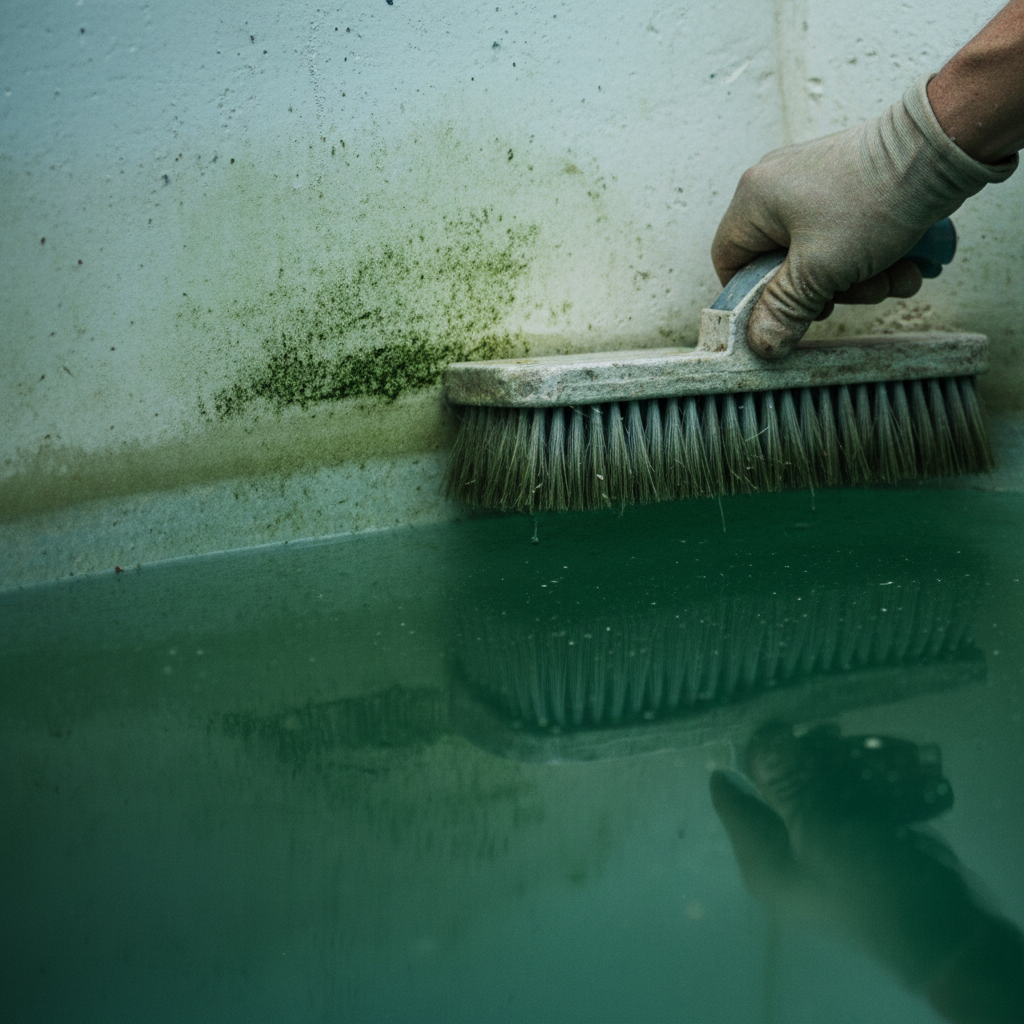
Managing pool water chemistry summer heat requires an understanding of how temperature functions as a catalyst for chemical reactions. In the science of water treatment, heat accelerates the rate at which molecules interact and dissipate. For instance, when your pool water reaches 85°F, chlorine reactions occur roughly 50 percent faster than they do at 75°F. This means the sanitizer intended to last several days is consumed at a vastly accelerated rate as the afternoon sun peaks over Hamilton County.
Beyond internal chemical speed, external UV rays contribute significantly to what professionals call "chlorine burn off." Without proper stabilization, ultraviolet radiation can strip a pool of its sanitizing power in a matter of hours. This is particularly challenging during a typical Indiana July, where temperatures in Carmel and Fishers frequently sustain in the high 80s. Unlike dryer climates in the American West where low humidity allows pool water to shed heat rapidly once the sun sets, the Midwest's persistent humidity acts as an insulator. This prevents a necessary cooling period for the water; it keeps temperatures high overnight and forces your chemicals to work overtime without a break.
It is vital to recognize that high temperatures stimulate biological growth even before it becomes visible to the naked eye. Warm water provides the ideal incubator for algae spores. A pool might appear crystal clear on a Friday afternoon, but if the chlorine has been depleted by heat and heavy use, an algae bloom can take hold beneath the surface by Saturday morning. Maintaining a consistent residual of sanitizer is the only way to counteract this constant biological pressure. If managing these fluctuating levels becomes a burden during the peak of the season, seeking professional pool care ensures that your water remains balanced despite the relentless Indiana sun. Regular testing becomes a non-negotiable task when the heat index rises, as the window for correction narrows significantly as the thermometer climbs.
How Indiana Thunderstorms Disrupt Your Pool Balance
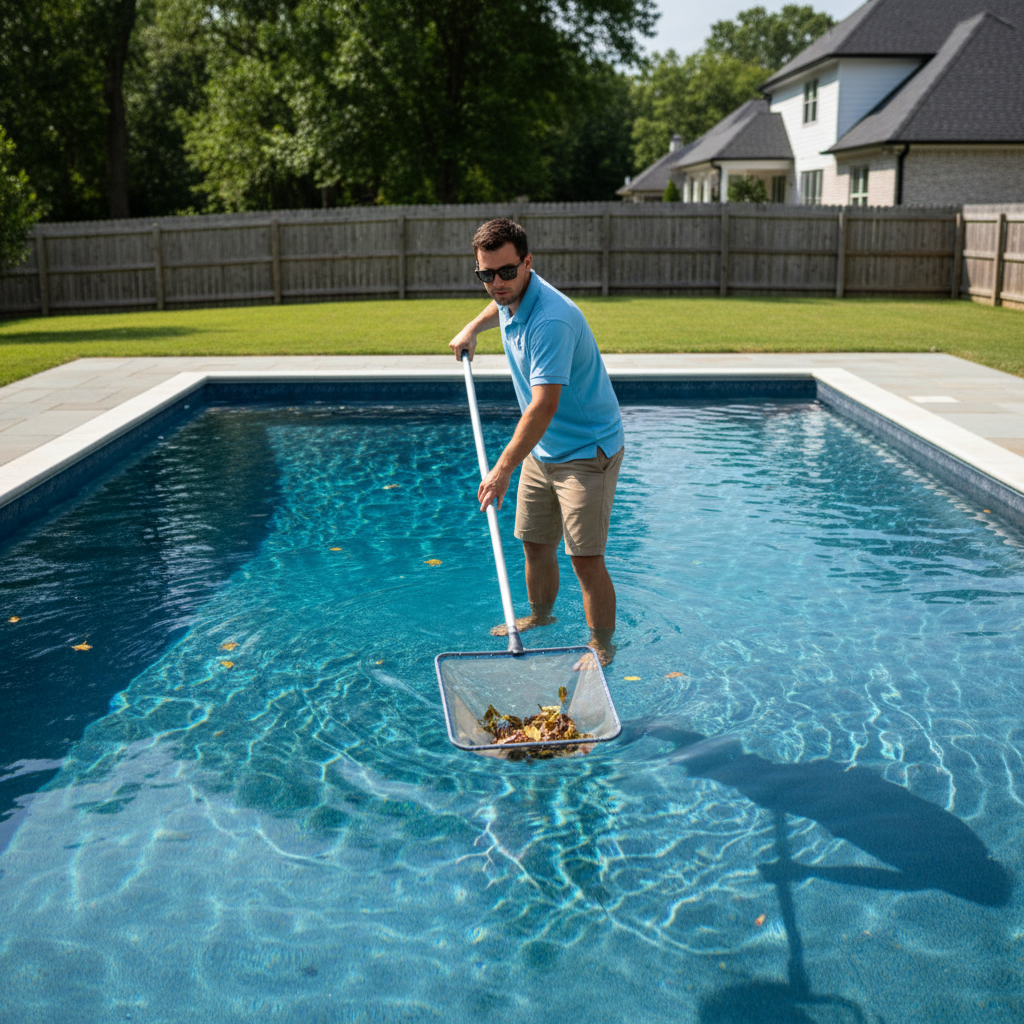
While the sun is the primary driver of chemical consumption, the sudden arrival of a Midwest thunderstorm introduces an entirely different set of challenges. Heavy rainfall in Indiana is typically slightly acidic, often carrying a pH between 5.0 and 5.5. When several inches of rain fall into your pool during a Carmel or Noblesville storm, it does more than just raise the water level; it actively dilutes your pool chemistry and lowers both pH and total alkalinity. Total alkalinity acts as a buffer for your pH. When it is stripped away by acidic rain, your pH levels become unstable, often crashing and leading to corrosive water conditions that can irritate skin and damage pool equipment.
Beyond the water itself, the high winds characteristic of Hamilton County storms carry significant amounts of organic debris. Leaves, pollen, and fine dirt from surrounding backyards are blown directly into the water. This influx of organic matter creates an immediate, massive demand for sanitizer. Chlorine that was previously managing the pool water chemistry summer heat is suddenly diverted to breaking down these new contaminants. This sudden shift often leaves the pool with zero free chlorine residual just as the sun comes back out, creating the perfect environment for a bloom.
Perhaps the most persistent issue following a storm is the introduction of nitrates. In our community, where residential lawns are meticulously fertilized and agricultural fields are often nearby, runoff frequently carries nitrogen compounds into the water. Nitrates are essentially a high-grade fuel for algae. Once nitrates are established in a pool, they cannot be removed by chlorine alone, which explains why some pools struggle with persistent algae even when other levels seem correct. If your water remains problematic or dull after a heavy downpour, you may need to contact our team for a comprehensive nitrate test. Addressing these disruptions quickly is a hallmark of professional pool care and prevents a minor weather event from turning into a week-long cleanup.
Pool Water Chemistry 101: Key Levels to Monitor
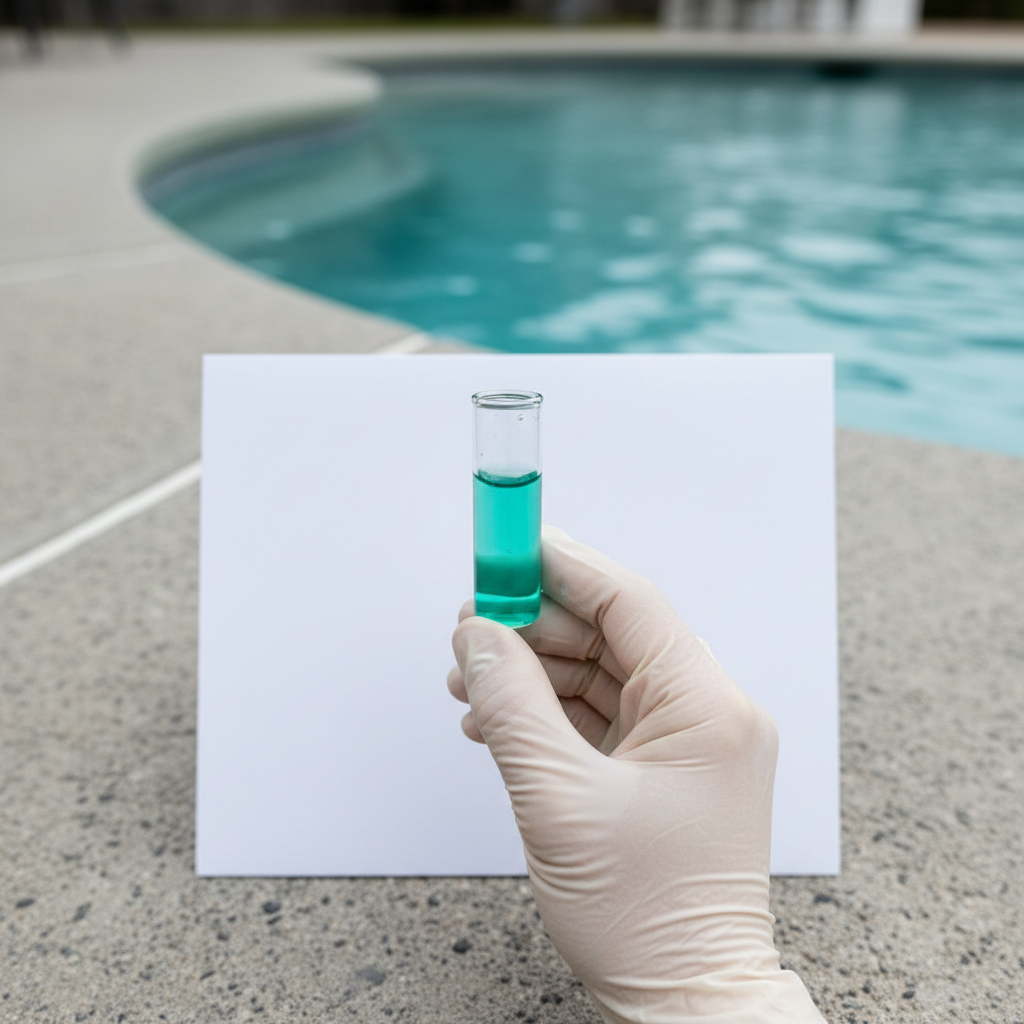
Maintaining stability after a storm or during a heatwave starts with a firm grasp of pool water chemistry basics. While many owners focus solely on chlorine, four specific pillars dictate how your water behaves and how well it resists the pool water chemistry summer heat. If these levels are ignored, even high doses of chlorine will fail to keep the water safe and clear.
pH (7.4 to 7.6): This is the measure of how acidic or basic your water is. Maintaining this specific range is crucial because it mimics the pH of the human eye and ensures your chlorine remains active. When the pH climbs above 7.8, chlorine becomes sluggish and losing its ability to kill pathogens; conversely, low pH can lead to equipment corrosion and skin irritation.
Total Alkalinity (80 to 120 ppm): Think of alkalinity as the anchor for your pH. It provides the buffering capacity needed to prevent wild swings in pH levels when it rains or when chemicals are added. If your alkalinity is too low, your pH will bounce, making it nearly impossible to keep the water stable through a typical Indiana weather cycle.
Cyanuric Acid (CYA): Often referred to as sunscreen for chlorine, CYA protects your sanitizer from being instantly evaporated by UV rays. Without a proper CYA level, you could lose your entire chlorine residual in just a few hours of direct afternoon sun. In Hamilton County, keeping this level balanced is essential for cost-effective professional pool care.
Calcium Hardness: This measures the dissolved minerals in your water. Indiana is known for having relatively hard water; if this level is too low, the water becomes aggressive and leaches minerals from your pool surfaces. If it is too high, you will see white, crusty scale forming on your tile line and inside your heater.
Chemical Pillar | Recommended Range | Primary Function |
|---|---|---|
pH | 7.4 – 7.6 | Sanitizer efficiency and swimmer comfort |
Total Alkalinity | 80 – 120 ppm | Buffers pH against rapid changes |
Cyanuric Acid | 30 – 50 ppm | Protects chlorine from UV degradation |
Calcium Hardness | 200 – 400 ppm | Prevents surface corrosion or scaling |
If you find these levels drifting despite regular additions, reviewing pool maintenance common questions can help clarify the relationship between these chemicals and how they react to our local environment.
Why Your Pool is Cloudy Even When Chemicals Seem Fine
It is a common frustration for homeowners in Noblesville and Fishers to see their water turn hazy despite a test strip showing ideal ranges. When your pool remains cloudy even though pH and chlorine appear balanced, you are likely dealing with high Total Dissolved Solids (TDS) or phosphates. TDS represents the accumulation of everything that has ever dissolved in your water, including minerals, salts, and chemical byproducts. As evaporation occurs during the peak pool water chemistry summer heat, these solids become more concentrated; eventually, they reach a point where the water loses its ability to stay clear and begins to look thick or dull.
Phosphates are another invisible culprit, often introduced through wind-blown lawn fertilizers or local organic debris. These compounds act as a primary food source for algae. Even if your chlorine levels are sufficient to prevent a full green bloom, high phosphate levels can keep the water looking lackluster and prevent it from ever reaching a true polish. Furthermore, heavy bather load from summer pool parties introduces sunscreens, body oils, and sweat into the system. These organic contaminants bind with chlorine to create chloramines, also known as combined chlorine.
Chloramines are ineffective at sanitizing and are the primary cause of eye irritation and that distinct, unpleasant chemical odor. A basic test strip might show high total chlorine, but it cannot always distinguish between the active sanitizer and these spent chloramines. If your water lacks its usual diamond-like sparkle despite your best efforts, it may require more advanced analysis. We recommend professional pool care to test for these specific factors, as standard DIY kits often miss the nuances of phosphate levels and TDS saturation. If you are struggling with persistent cloudiness that will not clear, you can contact our team for a comprehensive water diagnostic.
Practical Steps to Keep Your Pool Crystal Clear All Summer
Moving from understanding the causes of cloudiness to active prevention requires a disciplined routine tailored to the local climate. To manage the pool water chemistry summer heat effectively, you must adapt your maintenance schedule to the specific environmental pressures found in Central Indiana.
Increase testing frequency: During a sustained heatwave, testing once a week is insufficient. You should test your water at least twice a week. This allows you to catch falling chlorine levels or shifting pH before they lead to a visible algae bloom or equipment damage.
Shock after high usage or storms: Heavy rains in Noblesville or a weekend of entertaining at a Geist area home introduces massive amounts of organic matter and bacteria. Shocking the pool immediately after these events oxidizes contaminants and resets your sanitizer levels. It is particularly important to check for 'spent' chlorine on Monday mornings after a long, sunny weekend at Morse Reservoir properties, as high bather loads and UV exposure will have likely exhausted your residual.
Daily skimmer maintenance: Empty your skimmer baskets every 24 hours. Wind-blown leaves and local organic debris trapped in a basket will quickly begin to decay. This decay creates a localized demand for chlorine that robs the rest of the pool of its sanitizing protection.
Extend filtration cycles: On days exceeding 90 degrees, your pump should run for a minimum of 12 to 18 hours. In extreme heat, running the filter 24 hours a day is often necessary. Increased circulation ensures that chemicals are distributed evenly and that the filter can keep up with the accelerated biological growth cycles triggered by the warmth.
If your schedule does not allow for this level of consistency, scheduling professional pool care can take the guesswork out of the process. If you notice your water remains stubborn despite these steps, contact our team to investigate deeper issues like phosphate saturation or filtration inefficiencies.
When to Call a Hamilton County Pool Professional
Routine maintenance like skimming and emptying baskets is essential, but there is a distinct line where residential testing kits reach their limits. When you face persistent algae blooms that return despite heavy shocking, or if you notice stubborn white scale forming along your tile line, it indicates a deep-seated chemical imbalance. These issues often stem from complex factors like high phosphate levels or a saturated water table that simple test strips cannot accurately diagnose. Hamilton County Pool Services provides the specialized equipment and professional grade chemicals required to reset your water safely and efficiently.
Our team brings a localized perspective that generic internet guides lack. We understand how the specific humidity levels in Fishers and the agricultural runoff common near Noblesville impact your pool water chemistry summer heat management. We are familiar with the hard water profile of Central Indiana; this knowledge allows us to adjust calcium hardness and alkalinity with precision, preventing long term damage to your pool’s plaster and plumbing. If the daily demands of testing and balancing become a source of stress, transitioning to professional pool care ensures your investment is protected. You can contact our team to establish a service plan that accounts for our unique local climate, or visit our pool maintenance common questions page to learn more about when a professional intervention is the safest choice for your family.